
David as Athlete and Movement Practitioner
Movement through embodied practice has been a constant thread throughout my life. My earliest memories of physical activity come from growing up in Idaho Falls, Idaho, where recess meant being outdoors every day—often in the snow—and climbing on the monkey bars. Movement was less about organized sport and more about exploration: climbing, chasing, testing balance and strength, and negotiating space with others. Even then, I was learning informally how bodies adapt to environments, how coordination emerges through play, and how perception and action develop together.
As a child and adolescent, I gravitated toward activities that required endurance, timing, and attunement to changing conditions rather than rigid technique. I skied downhill, cycled, and learned to slalom water skiing on a single ski. In high school, I ran my first road race—a one-mile fun run—finishing second overall and earning an impromptu invitation to join the varsity track team. Distance running soon became a shared practice with my father, as we trained each spring for the Cooper River Bridge Run in Charleston, South Carolina. Those neighborhood runs, gradually extending from three to six miles, were formative not only physically, but relationally and pedagogically. They taught me that improvement is ecological and cumulative—emerging through consistent exposure, adaptive pacing, and attention to feedback rather than sudden breakthroughs.
My background in endurance and fitness proved invaluable during my four years at the United States Naval Academy in Annapolis, Maryland. Of all the physical demands at the Academy, I was most drawn to calisthenics-based physical training (PT), consisting of pull-ups, push-ups, dips, and core work, which emphasized bodyweight control, structural integrity, and repeatable effort under fatigue. These sessions were less about peak output on any single day and more about cultivating durability, efficiency, and disciplined attention over time.
As an adult, endurance sport became a long-term laboratory for embodied learning. I completed 28 IRONMAN® distance triathlons, including the World Championship in Kona, Hawaii, and competed in more than 100 triathlons, as well as multiple marathons and Spartan Races. In 2007, I was inducted into the Vineman Triathlon Hall of Fame, and in 2008, I earned my professional triathlete license. Over time, however, my relationship to competition shifted. What mattered most was not peak performance, but what long-duration training revealed about adaptation, breakdown, recovery, and the limits of willpower and the body.
Across these phases—from childhood play to elite endurance sport—my intention has remained consistent: understanding how bodies perceive, adapt, and act within complex, changing environments. This orientation now finds a parallel expression in my practice of ninjutsu, where movement efficiency, awareness, and responsiveness to dynamic conditions take precedence over force, speed, or technical accumulation. The throughline is not athletic achievement as identity, but movement practice as inquiry—a way of cultivating perception, judgment, and self-regulation under real constraints.
Today, I draw on this broad athletic background to support others—students, practitioners, and researchers—who are navigating their own learning edges. My experience across endurance sport, military training, martial arts, and now scholarship allows me to translate between embodied experience and conceptual understanding, and to help others develop practices that are sustainable, context-sensitive, and aligned with their goals. Movement remains, for me, both a way of living and a way of knowing.
What I shared above is what I have done and how my relationship to movement has evolved. The reflections below address why—tracing how endurance sport became a formative, transformative practice, and how its limits ultimately redirected my inquiry toward more ecological, sustainable forms of practice.
In my own words about triathlon:
Why did you become a triathlete?
While serving as a young officer in the U.S. Navy, I was diagnosed with cancer and underwent extensive radiation and surgery. In that context, training became a way of re-engaging with my body as a site of agency rather than pathology. Triathlon offered a demanding but transparent environment in which effort, adaptation, and recovery were directly coupled to outcomes. It provided a structured field in which perception, action, and feedback were tightly linked.
I entered my first triathlon in 1995 with considerable anxiety, but once the race began, that anxiety gave way to focused engagement. What captured my attention was not performance per se, but the way sustained practice reorganized attention, judgment, and self-regulation. A few years later, I encountered IRONMAN® triathlon and recognized it as a long-duration problem that foregrounded pacing, adaptability, and sensitivity to changing conditions.
What did you become most interested in as a triathlete?
My central question quickly shifted from “how do I improve?” to “how do humans adapt over time within demanding environments?” I became increasingly interested in how training functions as a learning ecology shaped by constraints, affordances, and feedback rather than sheer willpower. This curiosity led me to study exercise physiology at the graduate level, to seek out experienced coaches, and to coach athletes myself.
Over time, I came to see successful training less as optimization and more as attunement—learning to perceive meaningful signals, adjust behavior accordingly, and regulate effort across multiple timescales. These insights now resonate strongly with ecological approaches to learning, where skill emerges through sustained engagement with environments rather than the accumulation of techniques.
Why did you stop competing?
After more than a decade of high-volume endurance training, I experienced burnout, overtraining, and injury. This period exposed the limitations of dominant performance models that prioritize output and control while underestimating the costs of chronic load, attentional narrowing, and identity foreclosure. Stepping away from competition created space to reflect on how certain training cultures shape not only bodies, but values, self-concepts, and relationships to effort.
This experience marked an important shift: from treating discipline as endurance of strain toward understanding discipline as the capacity to modulate engagement, rest, and recovery in response to changing conditions.
What came next?
After briefly exploring obstacle racing, I turned toward other embodied practices, eventually immersing myself in ninjutsu. This transition represented a move from performance-oriented training toward practice as inquiry—where uncertainty, responsiveness, and ecological awareness are central rather than minimized. Since 2014, ninjutsu has served as a primary site for examining how perception-action coupling, constraint navigation, and relational awareness are cultivated through long-term practice.
I remain physically active, but my training now emphasizes mobility, breath, attention, and sustainability. These practices support not only physical health, but ongoing self-observation and self-regulation. Today, I draw on these experiences to support others—students, practitioners, and researchers—who are navigating their own developmental edges. Across contexts, movement remains a technology of the self: a way of learning how to engage more skillfully with complex, changing worlds.
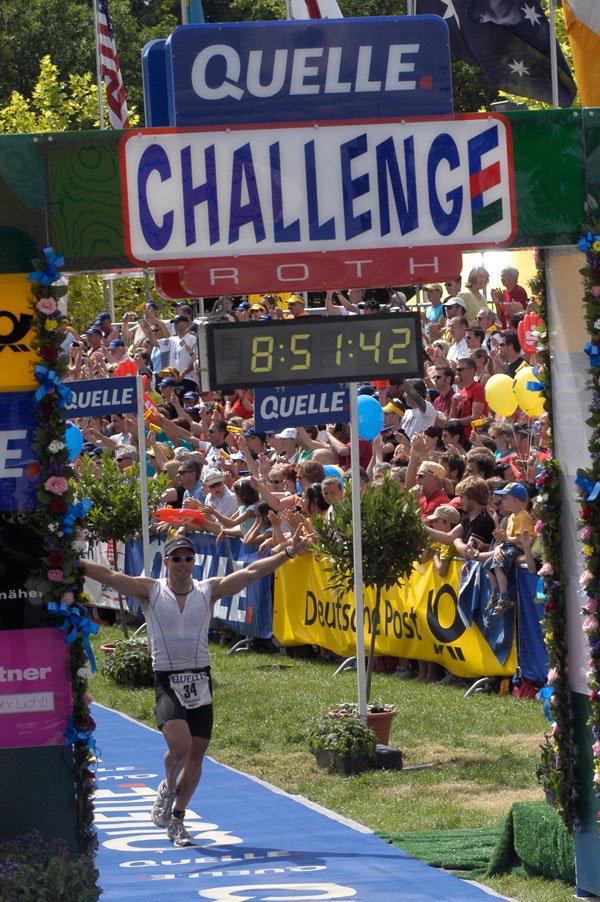
David’s athletic accomplishments include:
- 1st overall at Vineman Full Triathlon (2001, 2007)
- 1st overall at Blue Devil Full Triathlon (2002, 2003, 2004)
- 1st overall at Ocala Marathon (2007)
- Top 20 overall at Spartan Race Ultra-Beast (2012)
- 8:51 IRONMAN® distance personal best at Challenge Roth (2007)
- 2:46 marathon personal best at Disney Marathon (2007)
- 28x IRONMAN® distance triathlon finisher
- 8x USA Triathlon All-American
- USA Triathlon Elite (pro) license (2007-2009)